
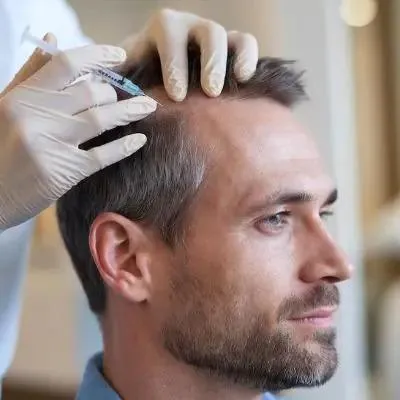
The main types of hair loss
| Type | What it looks like | Exosome therapy? |
|---|---|---|
| Male pattern baldness | Receding temples, thinning crown, gradual | Often discussed in early to moderate stages |
| Female pattern hair loss | Widening parting, diffuse thinning on top | Often discussed; transplant less suitable |
| Alopecia areata | Round, smooth patches; sudden | Specialist management first; regenerative therapy only as adjunct |
| Postpartum / telogen effluvium | Diffuse shedding after a trigger | Usually recovers alone; treat cause first |
| Scarring alopecia | Shiny, smooth scalp; follicles destroyed | Not suitable |
| Traction alopecia | Thinning at hairline from tight styles | Change styling first; may help early |
Common contributing factors
- Genetics and hormones, the main drivers of pattern hair loss.
- Nutritional deficiency, especially iron, vitamin D, zinc and protein.
- Thyroid and other hormonal conditions.
- Stress, illness, surgery, rapid weight loss, which can trigger diffuse shedding.
- Medications, including some for blood pressure, acne, depression and cancer.
- Scalp conditions such as seborrhoeic dermatitis and fungal infection.
- Styling habits: tight braids, extensions, chemical treatments.
Why diagnosis comes first
Exosome hair treatment is designed to support follicles affected by pattern hair loss. If the real cause is low iron or a thyroid problem, injecting the scalp will not fix it. A dermatologist at the clinic can distinguish between these causes, order tests where needed, and recommend the right first step. Sometimes that step is a prescription, not a procedure.
Read about each type
- Male Pattern Baldness Treatment in Islamabad: Androgenetic alopecia in men and where exosomes may fit.
- Female Hair Thinning Treatment in Islamabad: Diffuse thinning and female pattern hair loss.
- Alopecia Areata & Exosome Therapy: Patchy autoimmune hair loss and treatment considerations.
- Postpartum Hair Loss: Shedding after pregnancy and when to seek help.
Then see the complete exosome treatment guide.
Last reviewed: 2026-09-24. This article is general information and not medical advice. Suitability for any treatment must be assessed by a qualified doctor at Estheticare Clinic. Individual results vary.