
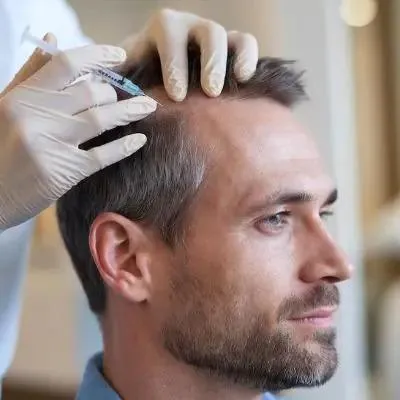
How it usually presents
Rather than a receding hairline, women more often notice a widening centre parting, a smaller ponytail, and thinning over the top of the scalp while the front hairline stays. This is female pattern hair loss, graded on the Ludwig scale. Diffuse shedding all over may instead point to telogen effluvium, which has different triggers.
Common causes in women
- Genetic (female pattern hair loss), often becoming noticeable after 40 but sometimes earlier.
- Iron deficiency, common in women of reproductive age.
- Thyroid disorders.
- Hormonal changes: polycystic ovary syndrome, menopause, stopping or starting contraception.
- Postpartum shedding.
- Crash dieting, illness or major stress.
- Tight hairstyles and chemical treatments (traction and breakage).
Treatment options
- Correct the cause first: iron, thyroid or hormonal treatment where tests show a problem.
- Minoxidil, topical or low-dose oral, under medical supervision.
- Anti-androgen medication in selected cases.
- PRP or exosome therapy to support follicles in pattern hair loss.
- Transplant in the minority of women with a stable donor area.
Where exosome therapy fits
Because surgery is less often suitable for women, regenerative scalp treatments are frequently part of the conversation. Exosome therapy may be considered for women with confirmed pattern hair loss who still have active follicles in the thinning zone. It is not a treatment for deficiency-related shedding, which improves once the deficiency is corrected. Read about what the treatment is designed to do and safety considerations.
Booking a consultation
We can arrange an appointment with a dermatologist at Estheticare Clinic, F-7/2 Islamabad. Let us know if you would prefer a female doctor. Book here.
Last reviewed: 2026-09-24. This article is general information and not medical advice. Suitability for any treatment must be assessed by a qualified doctor at Estheticare Clinic. Individual results vary.