
What it is
In alopecia areata the immune system attacks hair follicles, causing hair to fall out in round or oval patches. The follicles are usually not destroyed, which is why regrowth is possible. It can affect the scalp, beard, eyebrows or, in more extensive forms, the whole scalp (alopecia totalis) or body (alopecia universalis).
Standard treatment
- Topical or injected corticosteroids into the patches.
- Topical immunotherapy or other immune-modulating treatments in more extensive cases.
- Newer prescription options for severe disease, prescribed by a dermatologist.
- Observation, since small patches often regrow on their own.
Where exosome therapy fits
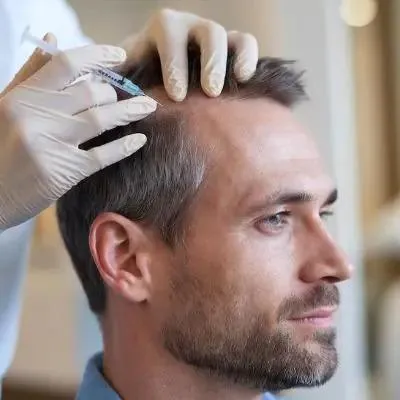
We want to be direct: exosome hair treatment is not a first-line treatment for alopecia areata, and we do not promote it as one. The condition needs the immune process to be managed. Some clinicians consider regenerative therapies as a supportive add-on once the disease is controlled, but that is an individual medical decision. If you have patchy hair loss, the right first step is a dermatology consultation, which we can arrange at Estheticare Clinic in F-7/2.
When to seek help quickly
Rapidly enlarging patches, nail changes, or loss of eyebrows and eyelashes warrant prompt specialist review.
Related: overview of hair loss types.
Last reviewed: 2026-09-24. This article is general information and not medical advice. Suitability for any treatment must be assessed by a qualified doctor at Estheticare Clinic. Individual results vary.